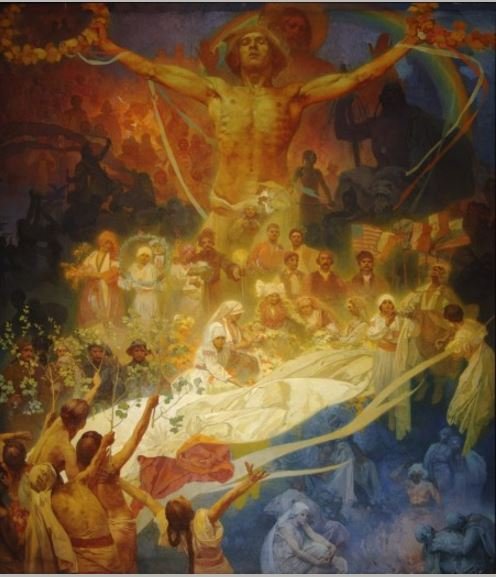
As mentioned in the previous posting, I am an avid admirer of Mucha’s work. It was not until visiting the Mucha Museum that I became aware of Mucha’s great work called the Slav Epic. They consist of 20 panels, some as tall as 10 feet.
From Wikipedia:
Mucha spent many years working on The Slav Epic cycle, which he considered his life’s finest masterpiece. He had dreamed of completing a series such as this, a celebration of Slavic history, since the turn of the 19th century, however, his plans were limited by financial constraints. In 1909, he managed to obtain grants by an American philanthropist and a keen admirer of the Slavic culture, a Mr. Charles Richard Crane. Mucha began by visiting the places which he intended to depict in the cycle, such as Russia, Poland and the Balkans, including the Orthodox monasteries of Mount Athos. Additionally, he consulted historians about the details of historical events in order to ensure an accurate depiction. In 1910, he began working on the series. Mucha continued working on them for 18 years. He gradually handed over the finished paintings to the city of Prague for display with the idea that a proper building would be built to house them.
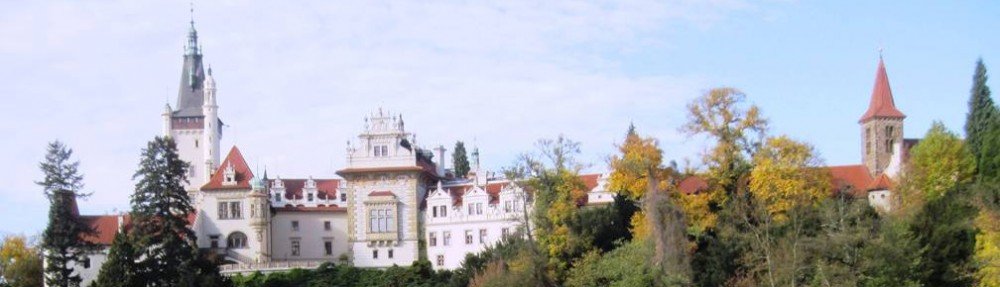
Following the Czechoslovak coup de etat of 1948 and subsequent communist takeover of the country, Mucha was considered a decadent and bourgeois artist, estranged from the ideas of socialist realism. The building of a special pavilion for the exposition of the cycle became irrelevant and unimportant for the new regime. After the war, the paintings were moved to Moravska Krumlov by a group of local patriots where they went on display in 1963 in the chateau and are there still.
Below is an example of one of the panels: To see all of the panels you can go to this site: http://www.muchafoundation.org/gallery/themes/theme/slav-epic (On the site click on each photo for an enlargement.)
Last winter we spent 3 months in Prague. We decided make the journey to Moravsky, which is about 216 km away from Prague, requiring a train or bus journey. Thank goodness I did some inquiries about the days and times the chateau would be open because I discovered it was closed during the winter months! I was extremely disappointed and wondered why they weren’t here in Prague, where they could easily be viewed by so many, instead of in a remote chateau that wasn’t even open year around.
After returning home to Greece I started reading the Prague Post on-line. How amazing! Articles started to surface regarding Mucha and the possible relocation of the panels to Prague! I was enthralled and without another thought I took sides that they should be relocated to Prague.
The subject became quite controversial. Each side suing the other and obtaining last minute restraining orders from the courts. Points of contention included how they should be housed, what kind of building would be required, if they could even be legally moved, who owned them! The Mayor of Moravsky Krumlov was not going to give in easily. He said that they brought in revenue of which the town had become dependent. Guess that would be a concern and a valid argument.
As the year progressed, the arguments grew quite interesting, at least to me. I saw it as a total tug of war. One week had the media reporting that the Epic will NOT be moved as no place in Prague was yet built to house them, as promised, (true) and no existing building would be acceptable. Then Mucha’s grandson retaliated saying he will fight government officials to the very end to have his grandfather’s hopes of having the Slav Epic collection housed at a suitable location in Prague. He felt honor bound to do as his grandfather would have wanted. Another admirable argument.
Months later the ownership argument resurfaced–who actually owned the paintings, even going so far as to mention the American, Mr. Randolph, who gave the money in the first place for them to be painted! (I saw this as a stalling tactic, as Mr. Randolph is no longer alive and would take a long time to sort that one out). Then Japan jumped in. They would be happy to restore and display them in Japan! That brought a quick No! from both sides, fearing if they left the country something unforeseen could happen and they might not be returned. (A good decision, in my opinion.) The tug of war went on until it became laughable. Neither side would budge or cooperate.
Then suddenly all was quiet on the front until the 14th of March when the Prague Post released this article:
˜Five paintings from Alphons Mucha’s famous Slav Epic are to go on
display at Prague’s Veletrzni Palac (Trade Fair Palace) in April, according to the head of the Prague Municipal Gallery which is now in charge of them. The first
five paintings from the 20-piece epic were relocated to Prague a month
ago despite protests from the town of Moravsky Krumlov which has housed
the collection for the last 47 years. The rest are to follow in the
autumn. The Prague Municipal Gallery says the paintings
are in very good condition and is awaiting permission to start
restoration work expected to last no more than a fortnight.”

From russianculture.wordpress.com
So, there you are! The tug of war is finally over, and Prague has won. I am over the moon because when we go to Prague this fall, I will finally be able to view them! A totally selfish wish on my part, however it will benefit many as they can now be seen year around.
How to get to the the Veletrzni Palac (Trade Fair Building):
Address: Veletrzni Palace (Trade Fair Palace), Dukelskych hrdinu 47,
How to get there: Tram 5, 12 or 17 to Veletr or metro red line C to Vltavska
Phone: +420 224 301 111,
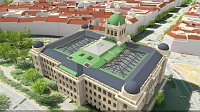 This is an artists rendering of the proposed works.
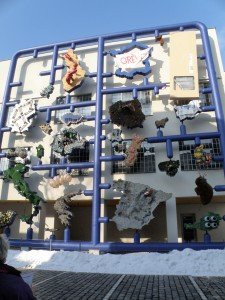 We visited his Entropa in the DOX Museum. This piece was commissioned by the EU to memorialize the Czech Republic’s term in the EU Presidency. But I heard Cerny had to return the kc350,000 fee because the work made fun of most of the EU member countries depicted.
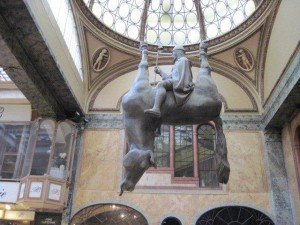 international coverage but the work that is mentioned in most Prague guide books is Saint Wenceslas Riding a Dead Horse located in the Lucerna Palace.